Friday, November 16, 2007
APOD 2.4
Yikes. Something bigger and more powerful than the A-bomb on Hiroshima? And not dropped by the United States? No, actually dropped by space. Where? Russia. When? June 30, 1908. What? A meteor. Why? Umm gravity? Actually yes, gravity. The meteor leveled trees, created a lake, and at 60 to over 1000 meters in diameter was large enough to level a metropolitan city. Is something like this, but more ginormous, what killed the dinosaurs? Maybe, but whatever it was it would have sucked to be a dinosaur. Or a tree in Siberia.

Friday, November 9, 2007
APOD 2.3
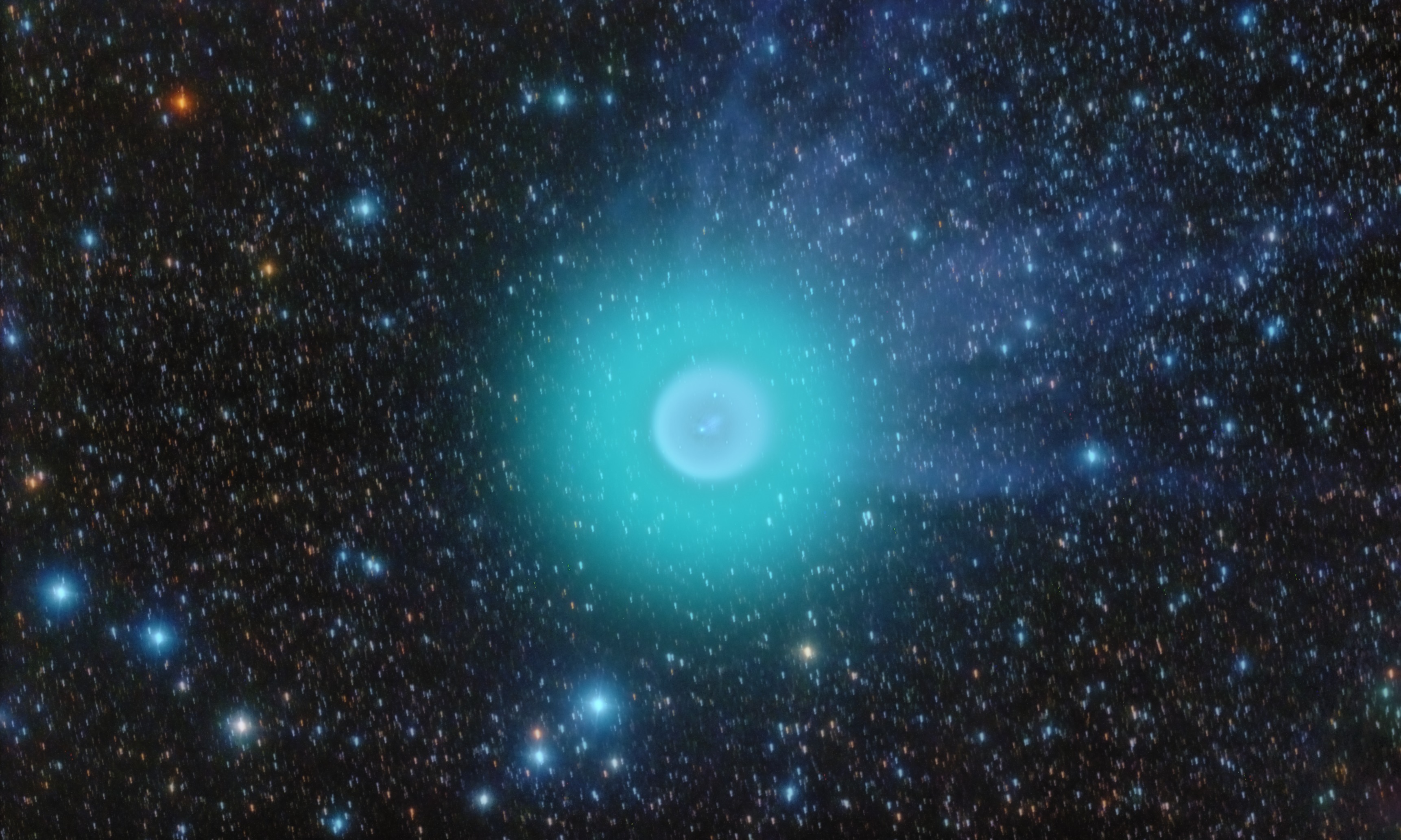
Hey the one person who reads this! We're covering the Comet Holmes again, which has continued to fascinate denizens of this universe with its newly gained brightness and visibility to the naked eye. When looking closer and past its blurry brightness, usually through the use of a high-resolution telescope, one can distinguish a blue tail on Holmes. Why is this so? Apparently solar wind is impacting the ions in Holmes's surrounding cloud and pushing them away from the sun, creating the tail effect. Since this is a recent development, it suggests that this increased brightness was not due to one singular happening but a continuing series of processes. We're quite lucky to have the chance to study a comet in such detail, as Halley is being a jerk and won't be seen for another few decades.
Friday, November 2, 2007
APOD 2.2
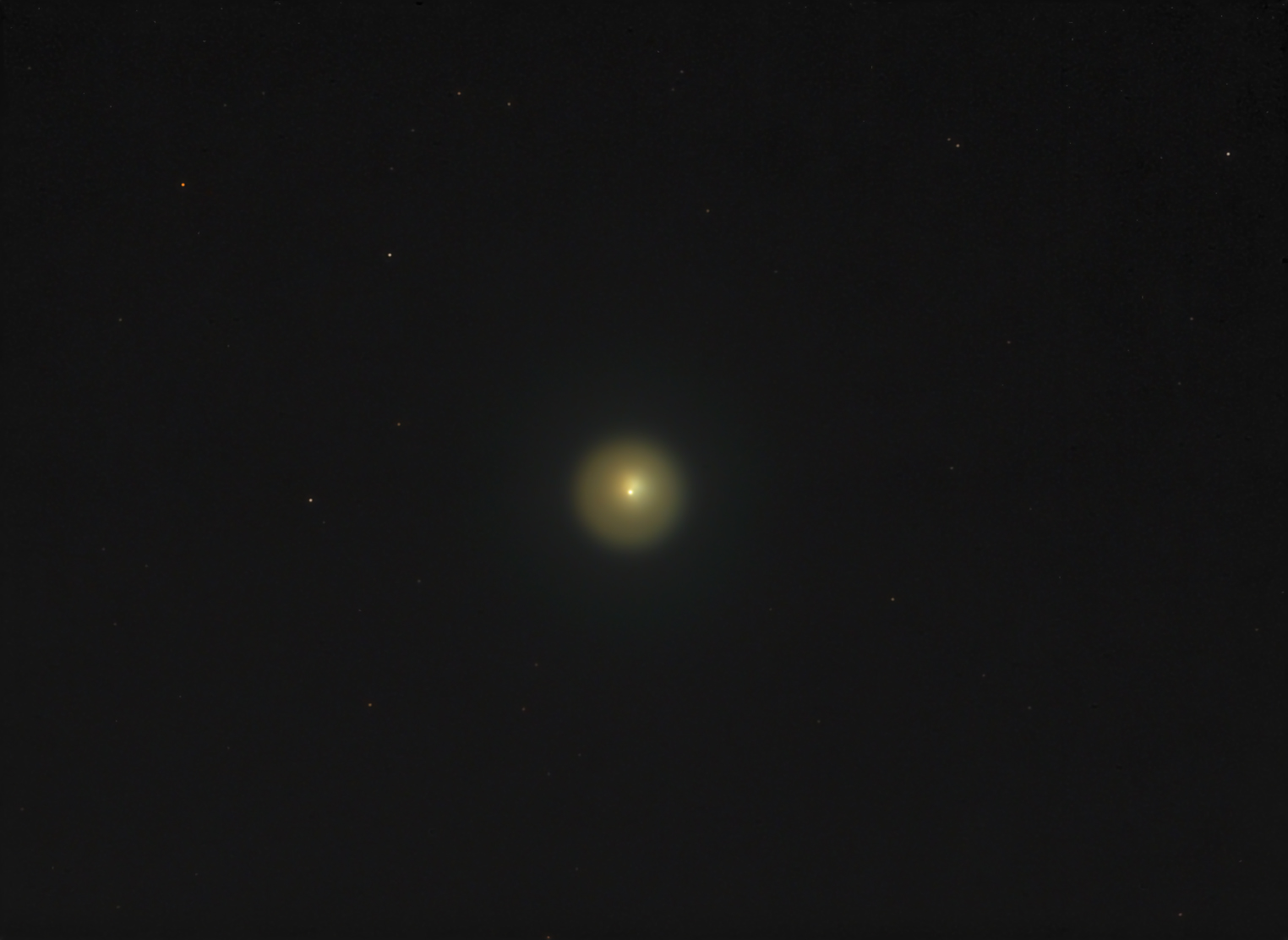
Whats happening to Holmes? Not Sherlock, mind you, but the comet that has recently gone from magnitude 17 to magnitude 3. When once you needed a really good telescope to spot it, it is now visible to the naked eye. What caused the gigantic increase in brightness? Maybe a release of gas and the sun reflecting off it. Or part of the comet's nucleus broke off, fissioning itself it seems. Apparently its going to remain in the northern sky for another two years, allowing us to study it possibly without a telescope for a while.
Friday, October 26, 2007
APOD 2.1
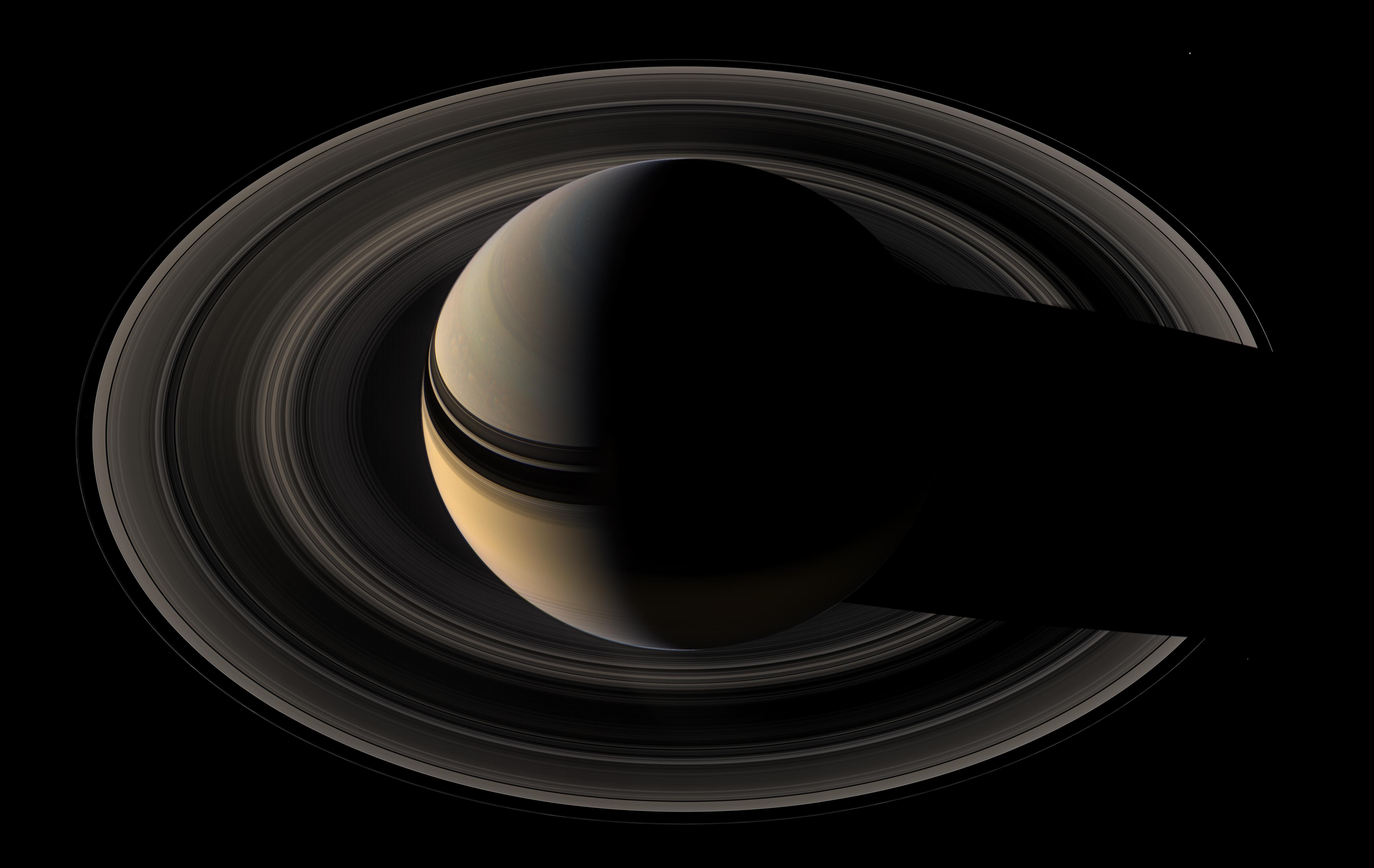
This is an image of Saturn as taken by the hardy little Cassini spacecraft, which orbits the ringed planet and takes photos like this. This doesn't look real to me but apparently it is, so apparently I have a lot to learn about the universe. It's awesome being able to see the shadow of the planet on its "rings" which are not rings but space dust and rocks pulled into Saturn's orbit. As it's impossible from Earth to see Saturn in a crescent phase, it's nice to see it from the Cassini ship.
Sunday, October 14, 2007
Observation - October 11th, 2007
October 11th, 2007
7:30 - 9:00 PM
Clark Rd, east of the interstate
Clear skies, moon not present, some lights to the northwest which obstruct view
Instruments used: Naked eye, really high-powered laser pointer, big telescope (not sure of specifications)
Planets: Jupiter and its four moons, all four forming a nearly straight line to the southeast
Bright stars noted: Vega, Deneb, Altair (summer triangle), Polaris, Antares
Constellations noted: Lyra, Cygnus, Aquila (contain summer triangle stars), Ursa Minor (Little dipper), Scorpius, Scutum, Hercules (keystone asterism), Sagittarius (teapot asterism), Delphinus (Job's Coffin)
Binary stars: Epsilon Lyrae double-double
Deep Sky objects: M57 (Ring nebula) faint smoke-ring
Other: saw Milky Way
7:30 - 9:00 PM
Clark Rd, east of the interstate
Clear skies, moon not present, some lights to the northwest which obstruct view
Instruments used: Naked eye, really high-powered laser pointer, big telescope (not sure of specifications)
Planets: Jupiter and its four moons, all four forming a nearly straight line to the southeast
Bright stars noted: Vega, Deneb, Altair (summer triangle), Polaris, Antares
Constellations noted: Lyra, Cygnus, Aquila (contain summer triangle stars), Ursa Minor (Little dipper), Scorpius, Scutum, Hercules (keystone asterism), Sagittarius (teapot asterism), Delphinus (Job's Coffin)
Binary stars: Epsilon Lyrae double-double
Deep Sky objects: M57 (Ring nebula) faint smoke-ring
Other: saw Milky Way
Friday, October 12, 2007
Ole Roemer Biography
Thatcher Svekis
Mr. Percival
Astronomy 0
12 Oct. 2007
Ole Roemer
In Arhus, Jutland, on September 25th, 1644, Ole Christensen Roemer was born into the world he would so intensively study for the majority of his life. Dying on September 23rd, 1710, two days before his sixty-sixth birthday, Roemer would best be remembered as the astronomer who determined convincingly that light had a definite speed.
Roemer was not born into a high class, as his father was a skipper and his mother the daughter of an alderman. As he lived in relative obscurity, not much is known about him until his emergence in 1662 at the age of eighteen. This was when he was immatriculated into the University of Copenhagen and served as an apprentice and pupil to Rasmus Bartholin. Fortunately for Roemer’s future in astronomy, Bartholin had been assigned the task of preparing Tyco Brahe’s observations for publication, so Roemer was given a great in-depth look at the particulars of astronomy. In 1671 he would assist astronomer Jean Picard in locating Brahe’s observatory, and would serve as a companion to Picard in Paris for nine years after 1672. This time was spent making observations at France’s royal observatory, teaching the Dauphin, and constructing the beautiful fountains at Versailles. It was also in this time that he would observe the moons of Jupiter. Unlike Galileo though it was not to prove heliocentrism, but instead to shed light on…light.
Roemer began tracking Jupiter’s nearest moon Io as it orbited the planet, and he observed naturally that it orbited in the same amount of time every time. Six months later, Roemer observed that Io emerged from the shadow fifteen minutes later than usual. Roemer took into account the movement of Earth compared to Jupiter, thus accounting for the delay. To lose these fifteen minutes, Roemer calculated that Earth had to move 192,500 miles per second. Was he right? Well he was within three percent, which is pretty good for more than three hundred years ago. From this information Roemer predicted when the fifteen minutes would be gained back, and was correct about that too. At the age of thirty-one, Roemer presented these findings to the Academy to set the precedent that light has a finite speed, and is not affected by relative movement.
He would be best remembered for this discovery about light, but would still have an eventful remainder of his life. He embarked on a scientific mission to England in 1679, meeting gravity-establisher Isaac Newton, Edmund Halley, and John Flamsteed. Upon his return to Denmark in 1681 he was appointed the professor of astronomy at the University of Copenhagen. He married the daughter of his mentor Bartholin, and as royal mathematician introduced Denmark’s first national system of weights and measures in 1683. In 1700 he convinced the king of Denmark to introduce the Gregorian calendar, which Tyco Brahe failed to do so a century earlier, and established a few navigation schools throughout Denmark. He would serve as Chief of Police in Copenhagen until he died, and was most remembered for firing the entire staff upon his promotion due to low morale. He introduced oil street lamps in Copenhagen and exhibited a sort of social reform by trying to limit the number of homeless in the city. Roemer passed away in Copenhagen in 1710 at the age of sixty-five, but was not forgotten in the city of his death. Though astronomy would remember him for establishing that light had a finite speed, Copenhagen would remember him as a hard-working citizen and proponent of social reform.
Works Cited
Leinhard, John H. "No. 682: the Speed of Light." The Engines of Our Ingenuity. University of Houston. 12 Oct. 2007.
"Ole Roemer." LoveToKnow1911. 29 Aug. 2006. 12 Oct. 2007.
The Biographical Encyclopedia of Astronomers.
Mr. Percival
Astronomy 0
12 Oct. 2007
Ole Roemer
In Arhus, Jutland, on September 25th, 1644, Ole Christensen Roemer was born into the world he would so intensively study for the majority of his life. Dying on September 23rd, 1710, two days before his sixty-sixth birthday, Roemer would best be remembered as the astronomer who determined convincingly that light had a definite speed.
Roemer was not born into a high class, as his father was a skipper and his mother the daughter of an alderman. As he lived in relative obscurity, not much is known about him until his emergence in 1662 at the age of eighteen. This was when he was immatriculated into the University of Copenhagen and served as an apprentice and pupil to Rasmus Bartholin. Fortunately for Roemer’s future in astronomy, Bartholin had been assigned the task of preparing Tyco Brahe’s observations for publication, so Roemer was given a great in-depth look at the particulars of astronomy. In 1671 he would assist astronomer Jean Picard in locating Brahe’s observatory, and would serve as a companion to Picard in Paris for nine years after 1672. This time was spent making observations at France’s royal observatory, teaching the Dauphin, and constructing the beautiful fountains at Versailles. It was also in this time that he would observe the moons of Jupiter. Unlike Galileo though it was not to prove heliocentrism, but instead to shed light on…light.
Roemer began tracking Jupiter’s nearest moon Io as it orbited the planet, and he observed naturally that it orbited in the same amount of time every time. Six months later, Roemer observed that Io emerged from the shadow fifteen minutes later than usual. Roemer took into account the movement of Earth compared to Jupiter, thus accounting for the delay. To lose these fifteen minutes, Roemer calculated that Earth had to move 192,500 miles per second. Was he right? Well he was within three percent, which is pretty good for more than three hundred years ago. From this information Roemer predicted when the fifteen minutes would be gained back, and was correct about that too. At the age of thirty-one, Roemer presented these findings to the Academy to set the precedent that light has a finite speed, and is not affected by relative movement.
He would be best remembered for this discovery about light, but would still have an eventful remainder of his life. He embarked on a scientific mission to England in 1679, meeting gravity-establisher Isaac Newton, Edmund Halley, and John Flamsteed. Upon his return to Denmark in 1681 he was appointed the professor of astronomy at the University of Copenhagen. He married the daughter of his mentor Bartholin, and as royal mathematician introduced Denmark’s first national system of weights and measures in 1683. In 1700 he convinced the king of Denmark to introduce the Gregorian calendar, which Tyco Brahe failed to do so a century earlier, and established a few navigation schools throughout Denmark. He would serve as Chief of Police in Copenhagen until he died, and was most remembered for firing the entire staff upon his promotion due to low morale. He introduced oil street lamps in Copenhagen and exhibited a sort of social reform by trying to limit the number of homeless in the city. Roemer passed away in Copenhagen in 1710 at the age of sixty-five, but was not forgotten in the city of his death. Though astronomy would remember him for establishing that light had a finite speed, Copenhagen would remember him as a hard-working citizen and proponent of social reform.
Works Cited
Leinhard, John H. "No. 682: the Speed of Light." The Engines of Our Ingenuity. University of Houston. 12 Oct. 2007
"Ole Roemer." LoveToKnow1911. 29 Aug. 2006. 12 Oct. 2007
The Biographical Encyclopedia of Astronomers.
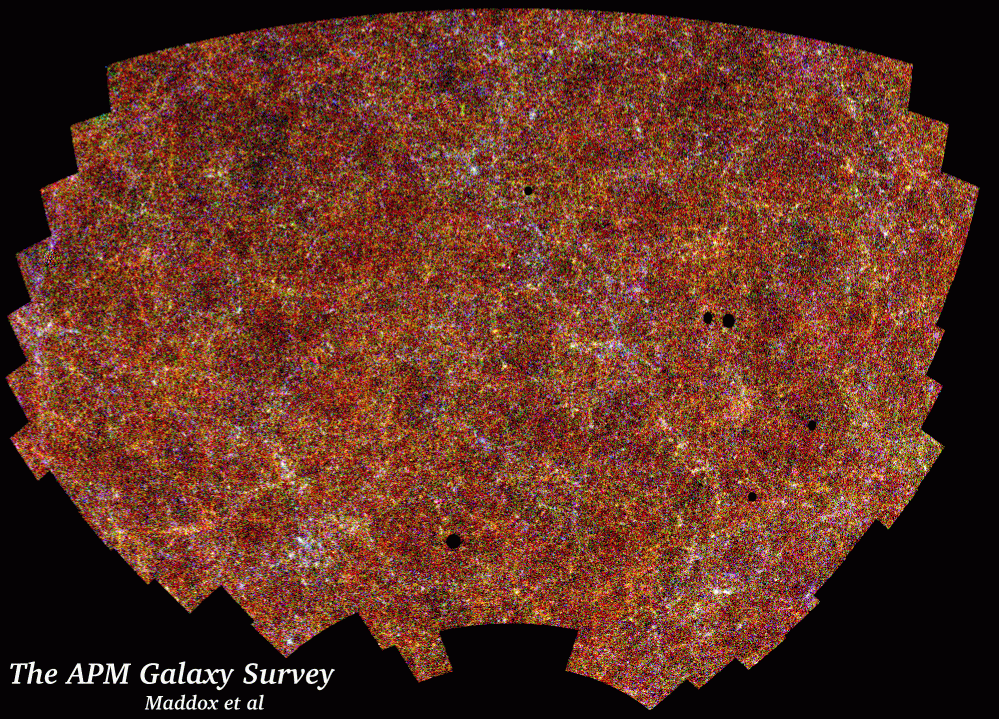
Saying that there are more stars in the universe than grains of sand on all the beaches sounds insane until you see this picture. Wow. 2 MILLION galaxies? Each containing their own amount of stars? Thats a heck of a lot. And that isn't even the entire universe, only a 100 degree slice of it. Too bad everything is millions of light years away and we can't even travel the speed of light, so we will definitely not get out there in my lifetime. The universe is a wondrous thing.
Friday, October 5, 2007
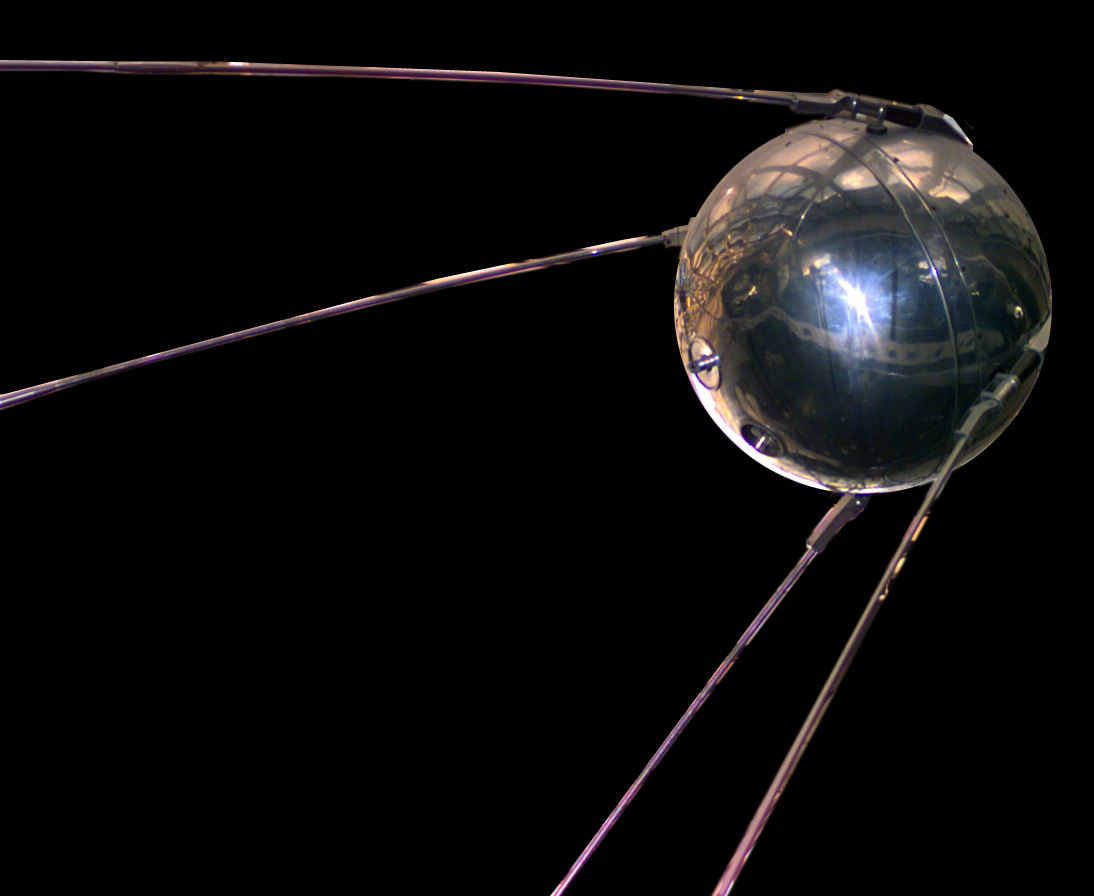
Looking at such a small and ugly thing it's hard to realize how important it was. Sputnik weighed 19 pounds more than me and is about four feet shorter, but probably had more an impact on the world than I ever will. I won't do anything close to being the first thing in space, starting the Space Race, inspiring the creation of NASA, or raising fears of spying Russians. At least I look better than this thing, which was surprisingly advanced for a time when we didn't have calculators. Oh technology.
Friday, September 28, 2007
APOD 1.5

My first guess was that this was a shot from a horror movie, complete with blood red sky and orange oversized moon. Fortunately this is not The Hills Have Eyes 3 but instead a real shot of the moon above a few cacti in the desert. The rising of a full moon can apparently be quite a sight, and its no different with this moon, the Saguaro Moon. Though the long focus lens of the camera has blown up its size, the colors of the moon and the sky are still pretty striking altogether. The light provided is amazing and is basically another sunrise.
Sunday, September 23, 2007
Observation - August 22nd, 2007
August 22, 2007
9:20 - 9:30 PM
My Backyard
Clear
Observed with the naked eye.
Again observed the relationship between the positions of Jupiter, Antares, and Luna. The moon has shifted dramatically in 24 hours, and now lies directly beneath Antares and Jupiter so that a straight line perpendicular to the horizon has been formed. This demonstrates parallax and how the relationship between the stars doesn't change because they are so far away, but the relationship between the moon and the stars does because the moon is much much closer to us.
9:20 - 9:30 PM
My Backyard
Clear
Observed with the naked eye.
Again observed the relationship between the positions of Jupiter, Antares, and Luna. The moon has shifted dramatically in 24 hours, and now lies directly beneath Antares and Jupiter so that a straight line perpendicular to the horizon has been formed. This demonstrates parallax and how the relationship between the stars doesn't change because they are so far away, but the relationship between the moon and the stars does because the moon is much much closer to us.
Observation - August 21, 2007
August 21, 2007
9:20 - 9:30 PM
Backyard
Mostly clear
Observed everything through the naked eye.
Noted the planet Jupiter's position in relation to the star Antares and our moon Luna. The three objects form a quasi-right triangle, with Antares being located at the 90 degree angle, Jupiter slightly above it, and the moon almost as far to the right as Jupiter is above. The moon looks to be in the waxing gibbous phase.
9:20 - 9:30 PM
Backyard
Mostly clear
Observed everything through the naked eye.
Noted the planet Jupiter's position in relation to the star Antares and our moon Luna. The three objects form a quasi-right triangle, with Antares being located at the 90 degree angle, Jupiter slightly above it, and the moon almost as far to the right as Jupiter is above. The moon looks to be in the waxing gibbous phase.
Friday, September 21, 2007
APOD 1.4 September 21st
W ow this picture is pretty outrageous. This Bruce McCandless guy is braver than I could ever be. I know his SAFER jetpack thing probably works all the time and the shuttle can come get him, but still. I wouldn't go into space let alone without anything keeping me attached to the shuttle, especially back in 1984 when that MMU technology was primitive compared to now. This guy has the proverbial "big cajones." Earth also looks pretty cool.
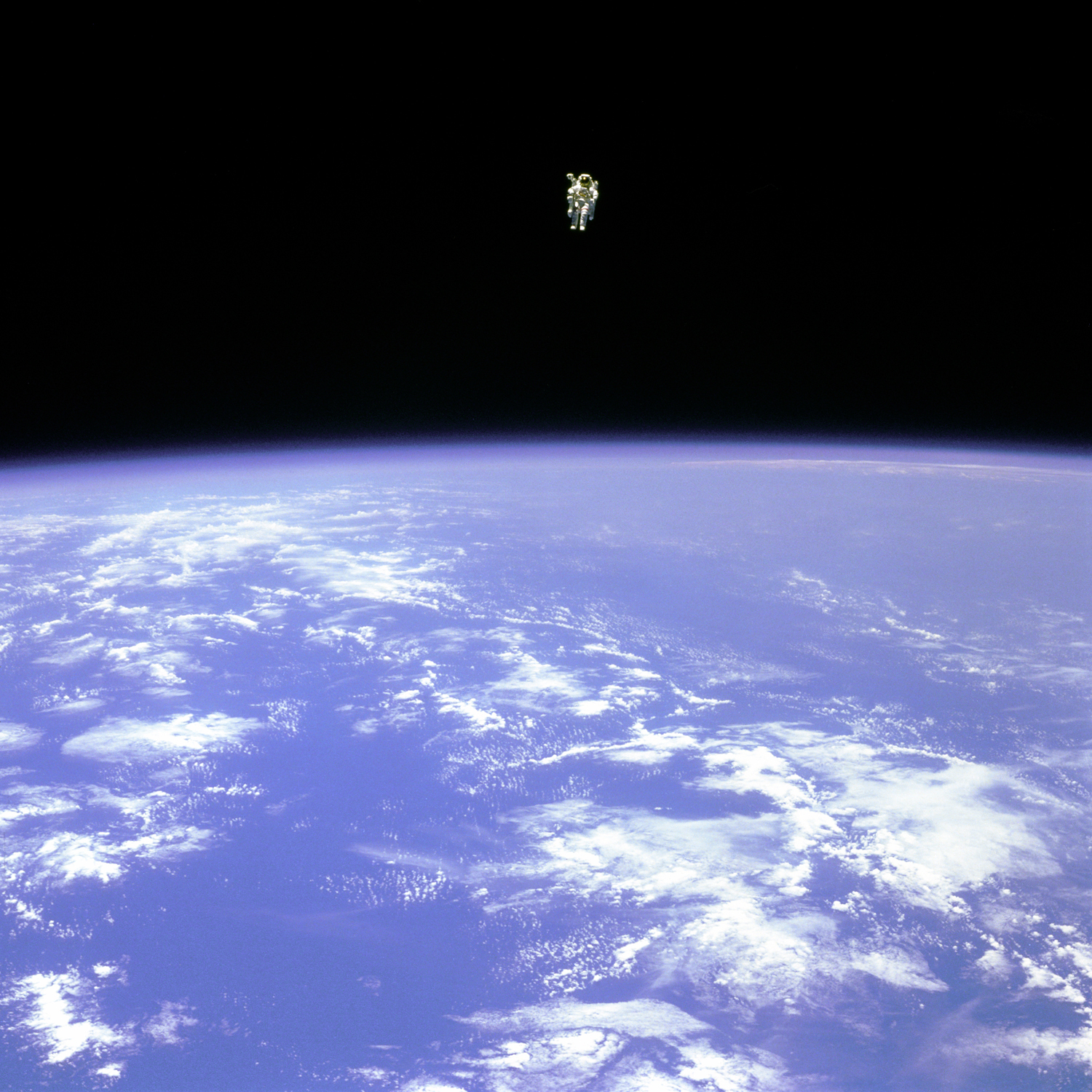 ow this picture is pretty outrageous. This Bruce McCandless guy is braver than I could ever be. I know his SAFER jetpack thing probably works all the time and the shuttle can come get him, but still. I wouldn't go into space let alone without anything keeping me attached to the shuttle, especially back in 1984 when that MMU technology was primitive compared to now. This guy has the proverbial "big cajones." Earth also looks pretty cool.
Friday, September 14, 2007
APOD 1.3 September 14th
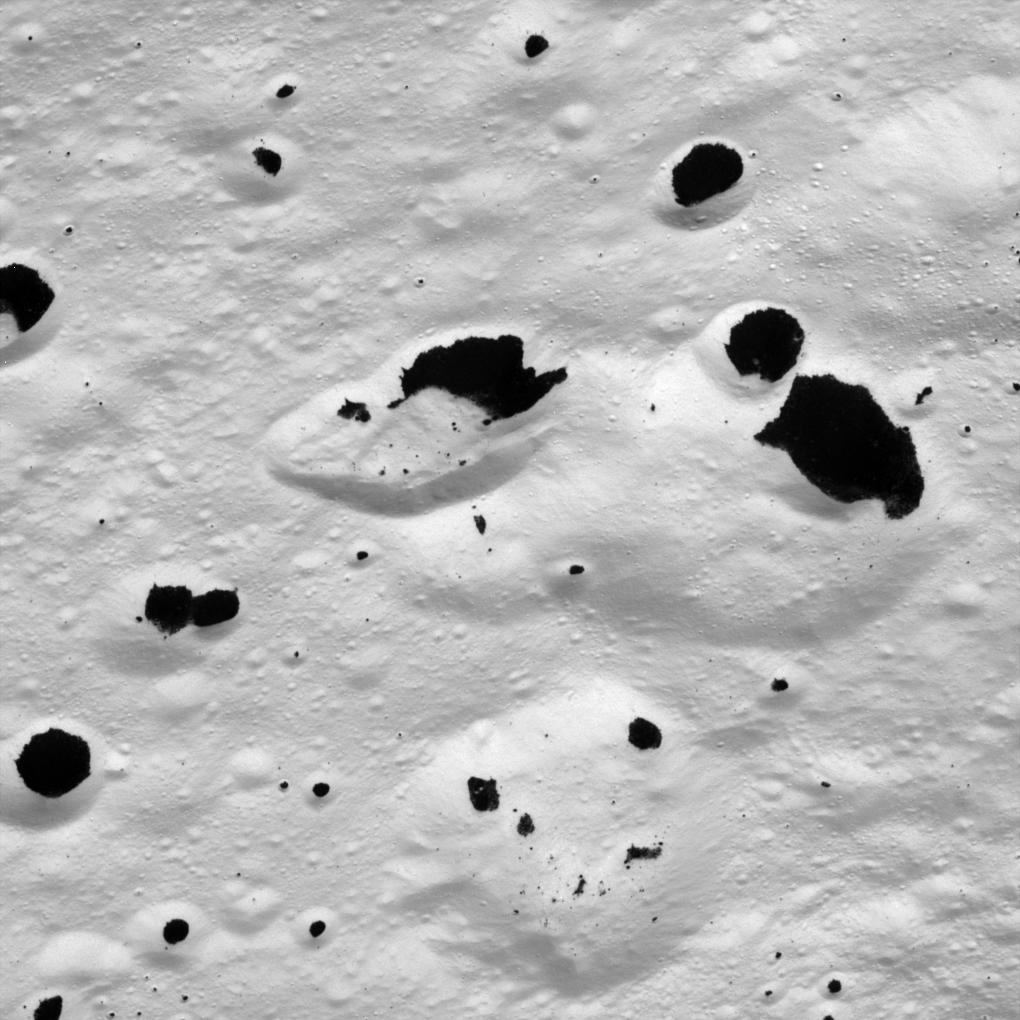 This picture details the atmosphere of Iapetus, one of Saturn's moon. I didn't know there could be different colors of atmosphere, and was surprised that it's common knowledge that Iapetus has dark (looks black) atmosphere and light (looks white) atmosphere. The planet's organic ice-dense composition is probably the cause for the atmosphere, and the dark terrain was named after a guy named Cassini Regio. Its really interesting to know that atmosphere can vary like that on the same planet.
Friday, September 7, 2007
APOD 1.2 September 7
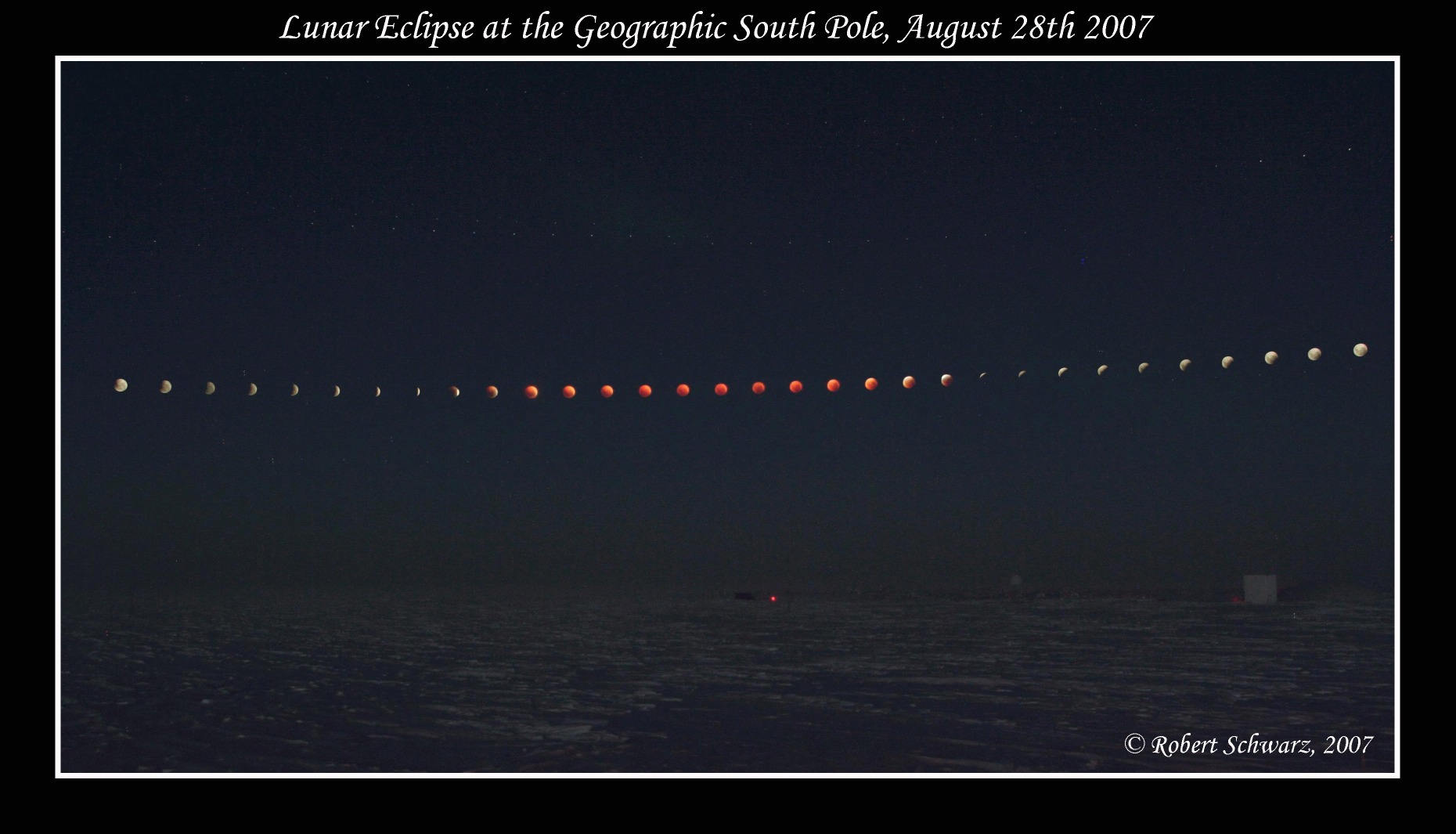 The recent lunar eclipse of August 28th was recorded recently at the South Pole by Robert Schwarz. I think it would be cool to see the moon here where it doesn't set for fourteen days. It was really freakin cold though, like I thought, so Schwarz had to record the photos through a slit in a heated room. Though these photos are slightly blurred due to the convection of the room, this man showed great bravery in enduring the cold and providing a revealing glimpse into the lunar cycles of the South Pole. I didn't know anybody resided at the South Pole, nor that the amount of atmosphere makes the photos even blurrier. It still looks really cool.
Friday, August 31, 2007
APOD August 31, 2007
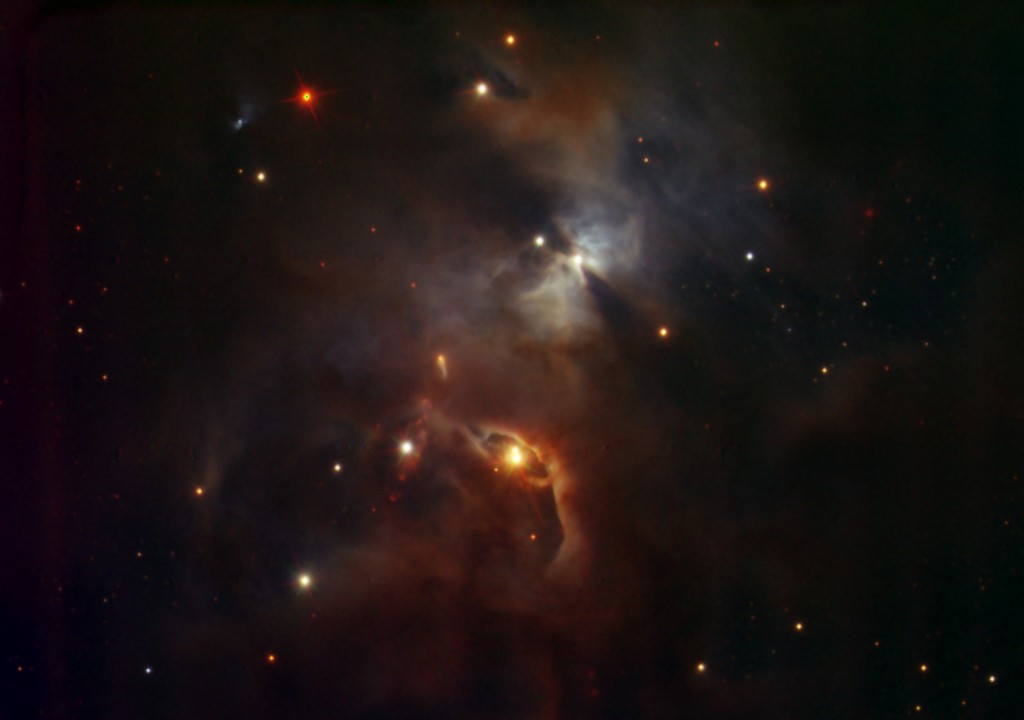
There are stars forming 1,000 light years away in Serpens Cauda, which means they actually were forming at the turn of 1,000 AD as the light took 1,000 years to get to Earth. The camera used, HAWK-I, had to be extra sensitive as the light emitted was near-infrared, and the wavelength is too long for the naked eye to pick up. The camera was just commissioned in Chile and demonstrates its impressive capabilities by picking up these newborn stars emerging from a molecular cloud.
First Post
Woohoo first astronomy post! This blog is going to be the best ever, just wait. Prepare for your mind to be blown.
Subscribe to:
Comments (Atom)